Category: Government
Six Months of War: What It Has Cost Gulf Government Budgets
The Strait of Hormuz closure broke the usual link between high oil prices and full Gulf treasuries. Six months later, Saudi Arabia and Kuwait are running deficits that outpaced their own projections, sovereign wealth funds have redirected capital toward domestic defense, and Oman’s ports have become the region’s only reliable trade route. Here is what the first two quarters actually cost, country by country.
Read More
GCC 2025 Compound Shock: How Gulf Governments Responded
Falling oil prices and new trade tariffs forced Gulf governments to adjust fiscal strategy in 2025. This review compares how Saudi Arabia, the UAE, Oman, and Bahrain each responded.
Read More
How the UAE Splits GCC Green Hydrogen Investment Between Masdar and ADNOC
Abu Dhabi runs two separate strategies inside its green hydrogen investment program. Masdar expands overseas, ADNOC protects domestic cash flow, and each track answers to a different investor. This piece breaks down what the split means for GCC business leaders, industrial buyers, and the SMEs supplying the sector.
Read More
Oman Vision 2040: Inside the New Five-Year Plan
Oman’s Eleventh Five-Year Development Plan (2026-2030) commits the country to 4 percent GDP growth, OMR 15.6 billion in new investment, and 700,000 job opportunities. Here’s what the plan actually targets, and how it compares to regional spending reviews underway in Saudi Arabia.
Read More
Oman’s Duqm: why the region’s most underrated port is suddenly well-positioned
When the Strait of Hormuz closed in February 2026, Oman’s Port of Duqm was already positioned to absorb the redirected trade. Years of investment in infrastructure, the India-Oman CEPA, and sovereign capital are now paying off
Read More
NEOM Reckoning: How Saudi Arabia Is Rebuilding a $500B City
Saudi Arabia converted NEOM from a single speculative vision into commercial assets PIF can fund on their own merit. This report tracks the fiscal mechanics behind the pivot, and the parallel discipline underway in Dubai, Oman, and Bahrain, with direct implications for GCC contractors and investors.
Read More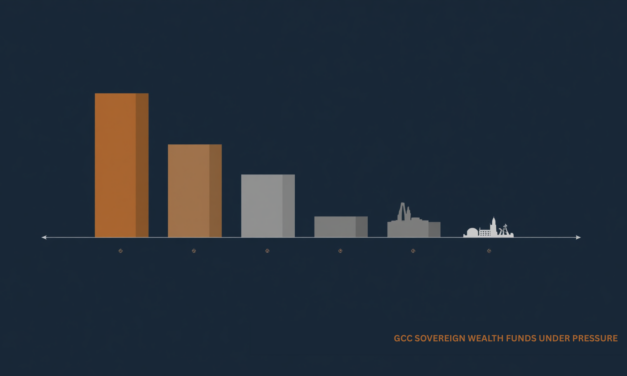
GCC Sovereign Wealth Funds 2026: PIF, KIA, and Mubadala Under Pressure
The 2026 regional conflict closed 94 percent of tanker traffic through the Strait of Hormuz — and exposed how differently the five GCC sovereign wealth funds were prepared for the shock. Saudi Arabia’s PIF issued a $7 billion bond to cover operating costs. Kuwait’s KIA holds liquid reserves averaging 520 percent of GDP. Bahrain’s Mumtalakat needs oil at $130 a barrel just to balance the state budget. This investigation maps the fiscal position of every major GCC fund with primary-source data, tracks the giga-project cuts, the dividend shortfalls, and the platform co-investment shift now underway across the region.
Read More
UAE’s We the Emirates 2031: Which Goals Survive the Tariff Storm?
UAE non-oil foreign trade passed AED 3.8 trillion in 2025, and the AED 4 trillion target is now expected four years early. This analysis scores each We the Emirates 2031 KPI against current data, maps the CEPA friction points, and identifies three actions for businesses operating in or trading with the UAE.
Read More
Bahrain’s Budget Deficit: The GCC’s Most Exposed Economy in a Low-Oil World
Bahrain’s government needs oil at $130 per barrel to balance its budget. Oil is trading at $70. The resulting deficit has pushed public debt to 134% of GDP, and a 10% corporate income tax arrives in 2027. This analysis covers what that fiscal gap means for businesses and investors operating in Bahrain today.
Read More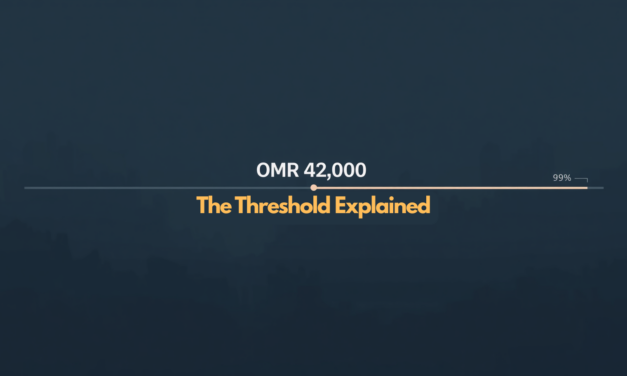
Oman’s Personal Income Tax: Who Pays, Who Is Exempt, and What It Means for Expats
Royal Decree No. 56/2025 makes Oman the first GCC state to introduce a personal income tax. The law sets a 5% flat rate on income above OMR 42,000 and takes effect on January 1, 2028. This article covers the full threshold mechanics, exempt income categories, residency rules, and employer withholding obligations.
Read More
Saudi Arabia’s Vision 2030 at a Fork: Scale Back or Borrow More?
Saudi Arabia entered May 2026 with a first-quarter budget deficit of $33.5 billion, more than double the shortfall recorded in the same period a year earlier. The Strait of Hormuz closure has cut oil revenues while government spending rises. Riyadh is now choosing between scaling back its Vision 2030 megaprojects or deepening its position in international debt markets. This analysis examines the fiscal data, the specific project decisions underway at NEOM and the Public Investment Fund, and the contrasting positions of Oman, the UAE, Bahrain, Qatar, and Kuwait in the same shock.
Read More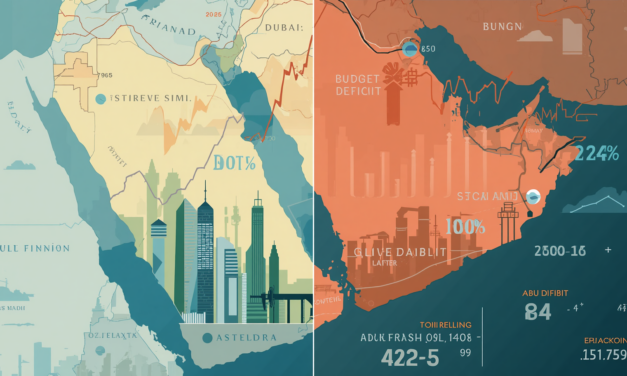
OPEC+ production vs. fiscal breakevens: a country-by-country scorecard
OPEC+ quota agreements cap revenue across GCC states while fiscal breakevens remain elevated. This scorecard ranks Saudi Arabia, UAE, Oman, and Bahrain on five variables and quantifies the gap between production-constrained income and budget requirements.
Read More