UAE’s CEPA network: the trade architecture making Dubai indispensable
The UAE’s CEPA network — 32 bilateral trade agreements, JAFZA free zones, and overland corridors — is how Dubai stayed indispensable despite Red Sea disruptions.
Read More

The UAE’s CEPA network — 32 bilateral trade agreements, JAFZA free zones, and overland corridors — is how Dubai stayed indispensable despite Red Sea disruptions.
Read More
Gulf HR directors face a hard deadline in May 2026: nationalisation quotas are enforced with full penalties while hiring remains frozen across logistics, finance, and hospitality. The UAE’s June 30 Emiratisation target, Saudi Arabia’s new Nitaqat Mutawar phase, and updated fee structures in Qatar and Oman all carry immediate financial consequences. This article sets out what each country requires and how leading organizations are meeting targets without adding headcount.
Read More
Saudi Arabia entered May 2026 with a first-quarter budget deficit of $33.5 billion, more than double the shortfall recorded in the same period a year earlier. The Strait of Hormuz closure has cut oil revenues while government spending rises. Riyadh is now choosing between scaling back its Vision 2030 megaprojects or deepening its position in international debt markets. This analysis examines the fiscal data, the specific project decisions underway at NEOM and the Public Investment Fund, and the contrasting positions of Oman, the UAE, Bahrain, Qatar, and Kuwait in the same shock.
Read More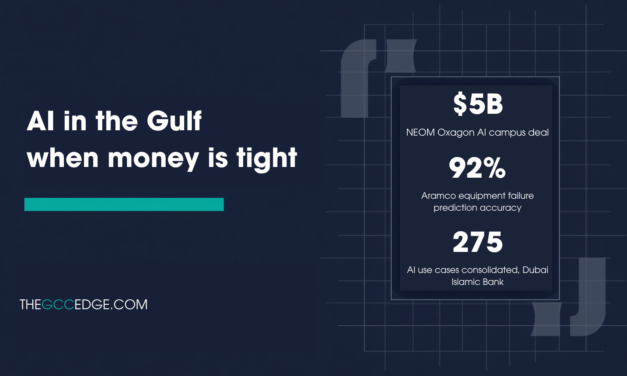
GCC AI funding is concentrating on one thing: operating cost reduction within 12 months. Analysis of where Saudi Arabia and the UAE are directing capital — and what is being paused.
Read More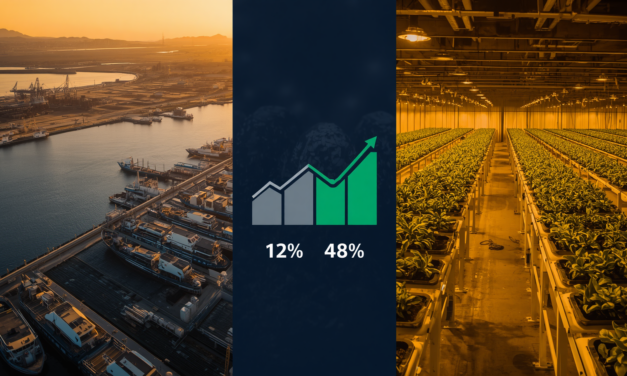
Oman agriculture and fisheries growth reached 12.5% in Q2 2025, outpacing the domestic technology sector by more than 2.5x. The NCSI data shows how Chinese export redirection, investment in controlled-environment farming, and a talent shift toward AgriTech are reshaping the GCC’s non-oil economy. This article breaks down the sector-by-sector numbers and what they mean for GCC business leaders allocating capital in 2025 and beyond.
Read More