Tag: Strait of Hormuz

Qatar’s LNG Edge: Why Gas Exporters Outlast Oil States

Qatar’s fiscal breakeven sits at $37.88 a barrel by 2030. Kuwait’s sits at $90.50.
That gap is the whole story of how the GCC’s energy exporters handled the 2026 Hormuz disruption differently. Gas exporters lock in revenue through 20-year contracts before spending a dollar on infrastructure. Oil exporters sell into a spot market that moves against them in real time.

Read More

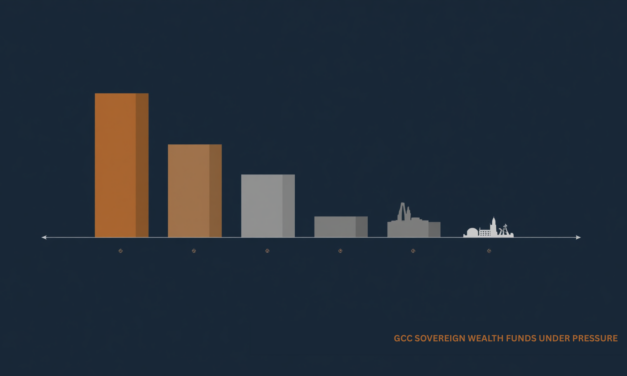
GCC Sovereign Wealth Funds 2026: PIF, KIA, and Mubadala Under Pressure

The 2026 regional conflict closed 94 percent of tanker traffic through the Strait of Hormuz — and exposed how differently the five GCC sovereign wealth funds were prepared for the shock. Saudi Arabia’s PIF issued a $7 billion bond to cover operating costs. Kuwait’s KIA holds liquid reserves averaging 520 percent of GDP. Bahrain’s Mumtalakat needs oil at $130 a barrel just to balance the state budget. This investigation maps the fiscal position of every major GCC fund with primary-source data, tracks the giga-project cuts, the dividend shortfalls, and the platform co-investment shift now underway across the region.

Read More

How GCC Corporates Are Adapting to the 2026 Economic Contraction

Dubai and Abu Dhabi real estate operate on different buyer profiles, return timelines, and regulatory frameworks. Dubai recorded more than 180,000 property transactions in 2025, with over 60% in the off-plan segment. Abu Dhabi attracts end-users, not traders. This article compares price per square foot, gross rental yields, exit liquidity, and the difference between RERA and Tawtheeq.

Read More

India-Gulf Trade: Investment, Ports, and CEPAs in 2026

Bilateral trade between India and the GCC reached USD 178.56 billion in 2024-25. This analysis covers sovereign investment flows, the RELIEF scheme for MSME exporters, Oman port diversification, CEPA terms by country, and what the incoming India-GCC Free Trade Agreement changes for corporate decision-makers.

Read More

Saudi Arabia’s Vision 2030 at a Fork: Scale Back or Borrow More?

Saudi Arabia entered May 2026 with a first-quarter budget deficit of $33.5 billion, more than double the shortfall recorded in the same period a year earlier. The Strait of Hormuz closure has cut oil revenues while government spending rises. Riyadh is now choosing between scaling back its Vision 2030 megaprojects or deepening its position in international debt markets. This analysis examines the fiscal data, the specific project decisions underway at NEOM and the Public Investment Fund, and the contrasting positions of Oman, the UAE, Bahrain, Qatar, and Kuwait in the same shock.

Read More

Programmable Halal Economy in the GCC: How Blockchain Is Changing Trade

The 2026 Hormuz crisis exposed a critical flaw in global halal trade: verification systems could not keep pace with real-world disruptions. In response, the GCC is moving toward a programmable model where compliance is embedded directly into financial and supply chain infrastructure. By combining blockchain, CBDCs, and Sharia-based validation systems, this new approach ensures that transactions only execute when both commercial and religious conditions are met. The result is faster trade, stronger trust, and a shift from manual certification to system-level enforcement.

Read More

Liquidity That Cannot Move Is Not Liquidity

The global banking system holds $27 trillion in prefunded accounts, but recent disruptions in the Gulf have exposed a deeper issue. Liquidity that cannot move becomes a constraint in times of crisis. This analysis explores how GCC economies are responding by shifting toward direct settlement systems and wholesale digital currencies to improve financial resilience.

Read More
Loading