Tag: National Digital Economy

Saudi Arabia’s Vision 2030 at a Fork: Scale Back or Borrow More?

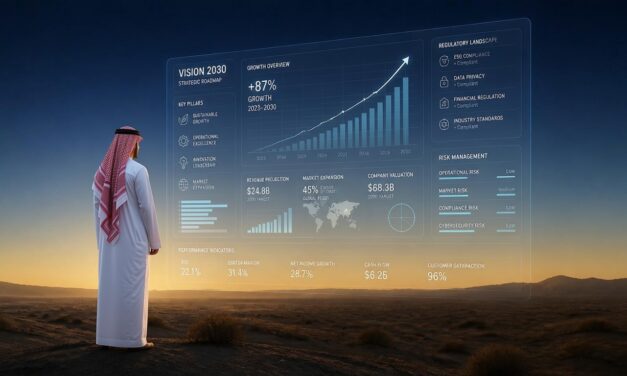
Saudi Arabia entered May 2026 with a first-quarter budget deficit of $33.5 billion, more than double the shortfall recorded in the same period a year earlier. The Strait of Hormuz closure has cut oil revenues while government spending rises. Riyadh is now choosing between scaling back its Vision 2030 megaprojects or deepening its position in international debt markets. This analysis examines the fiscal data, the specific project decisions underway at NEOM and the Public Investment Fund, and the contrasting positions of Oman, the UAE, Bahrain, Qatar, and Kuwait in the same shock.

Read More

Programmable Halal Economy in the GCC: How Blockchain Is Changing Trade

The 2026 Hormuz crisis exposed a critical flaw in global halal trade: verification systems could not keep pace with real-world disruptions. In response, the GCC is moving toward a programmable model where compliance is embedded directly into financial and supply chain infrastructure. By combining blockchain, CBDCs, and Sharia-based validation systems, this new approach ensures that transactions only execute when both commercial and religious conditions are met. The result is faster trade, stronger trust, and a shift from manual certification to system-level enforcement.

Read More

The Hormuz Blockade is Repricing Risk Across GCC Construction

The Strait of Hormuz blockade is disrupting GCC construction at its core. Rising material costs, shipping delays, and shifting contractor dynamics are forcing developers to rethink risk, timelines, and capital allocation. This analysis explains what it means for Dubai and Abu Dhabi’s 2026 property pipeline and which developers are best positioned to withstand a high-cost, high-delay environment.

Read More

Liquidity That Cannot Move Is Not Liquidity

The global banking system holds $27 trillion in prefunded accounts, but recent disruptions in the Gulf have exposed a deeper issue. Liquidity that cannot move becomes a constraint in times of crisis. This analysis explores how GCC economies are responding by shifting toward direct settlement systems and wholesale digital currencies to improve financial resilience.

Read More

AI@70 in Dubai: Reframing the Next Seventy Years of Artificial Intelligence

Seventy years after artificial intelligence was first defined at Dartmouth College, the field has reached a turning point. Technical capability is accelerating, but global alignment on governance, ethics, and long-term responsibility is not. AI@70 in Dubai brings together researchers, policymakers, and institutional leaders to address this gap, extending the AI conversation beyond short policy cycles and toward a shared vision for the year 2096.

Read More

The Productivity Paradox in Oman’s SME Economy

Oman’s SME sector employs more than three quarters of the private workforce, yet contributes only a fraction of total economic output. New data reveals a widening productivity gap that challenges long-standing assumptions about job creation, growth, and private sector development. As policymakers confront this imbalance, the focus must shift from counting firms to improving output per worker.

Read More
Loading