Why Standard Webinars Fail in the Gulf
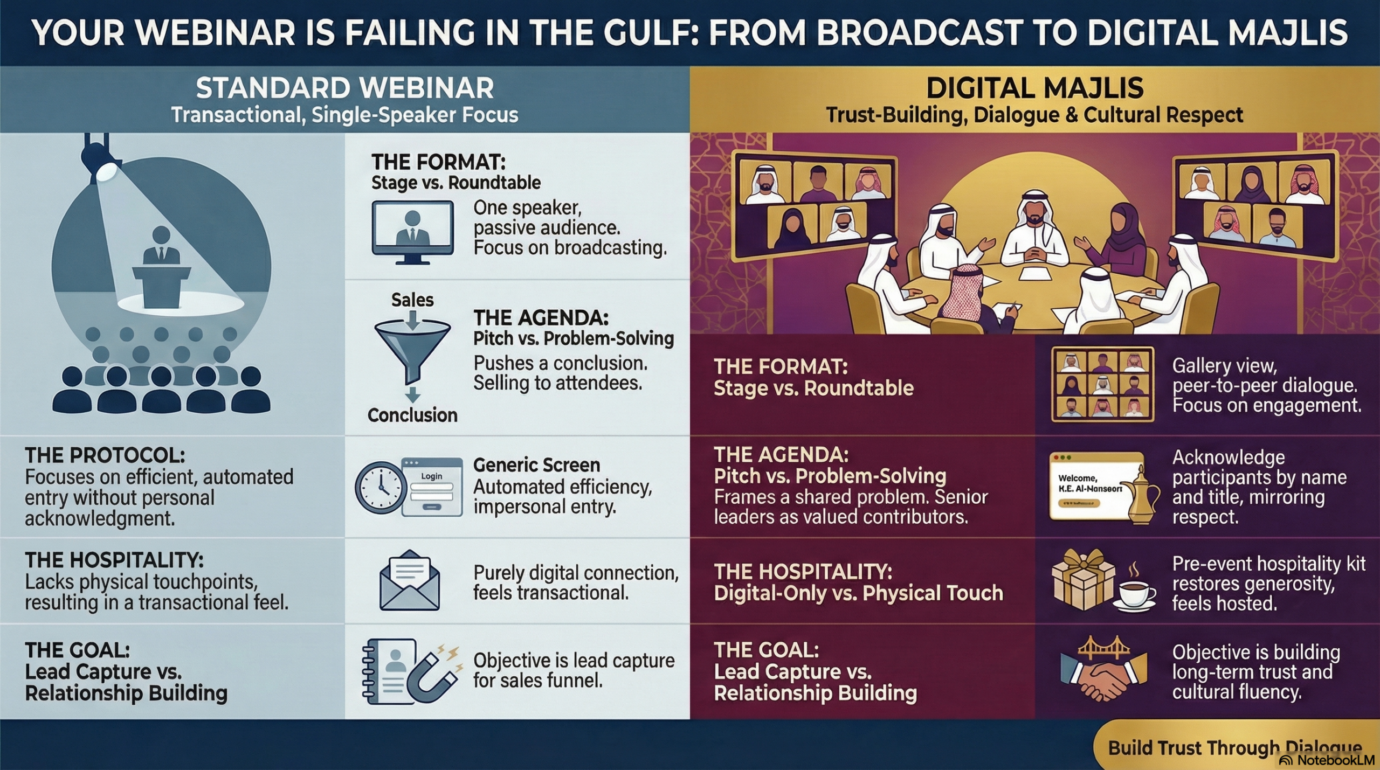
For years, global B2B teams have treated the Gulf like any other market. They deploy the same webinar format that works in London or New York, a long presentation followed by a brief, often silent Q&A.
In Dubai, Riyadh, and Doha, this approach rarely builds trust. That failure is not technical. It is cultural.
In the Gulf, senior decisions are not shaped through lectures. They are shaped through dialogue, presence, and consensus. When marketers ignore this reality, even the most polished digital event feels distant and transactional.
To engage executives in the region, companies must stop running webinars and start designing Digital Majlis experiences.
From Broadcast to Roundtable
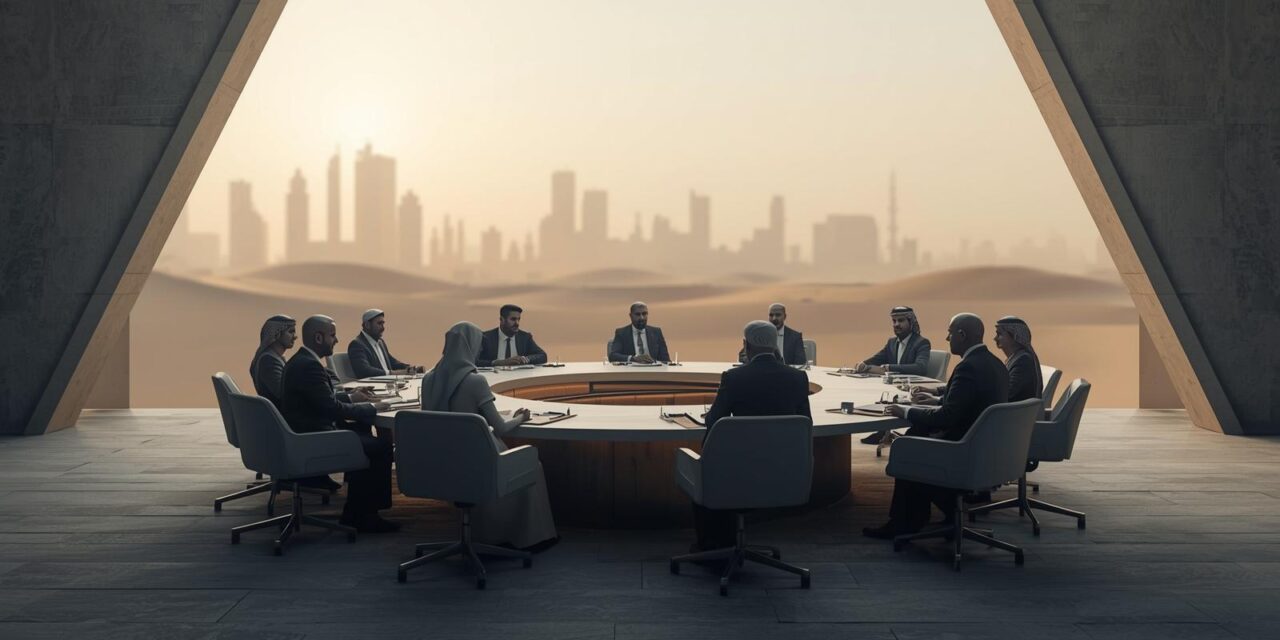
A traditional Majlis is designed for conversation, not instruction. Seating is circular, hierarchy is visible, and dialogue flows across the room rather than from a single point of authority.
Most webinar platforms default to a stage model. The speaker is visible, the audience is hidden, and participation is restricted. For a Gulf executive, this signals spectator status. It subtly strips away seniority and discourages engagement.
The fix is structural, not cosmetic. High-value executive sessions should never be run in webinar mode. They should be hosted as moderated meetings, with visible video feeds and active facilitation.
Gallery view matters. Seeing who else is present allows executives to read the room, assess peer participation, and validate the importance of the discussion. This mirrors how credibility is established in physical Majlis settings.
Hierarchy should also be managed visually. Senior participants should be acknowledged and positioned clearly on screen. Moderators can pin key stakeholders alongside the speaker, reinforcing status and signaling respect without verbal emphasis.
Most importantly, the agenda must change. A Digital Majlis does not push a conclusion. It frames a shared problem and invites validation.
An executive roundtable on AI challenges in the UAE positions participants as contributors, not students. This framing aligns with how senior leaders see their role in the region.
Protocol Matters More Than Slides
In the Gulf, business begins with recognition. Efficiency without etiquette feels cold, even disrespectful.
Digital events often skip this step. Hosts jump straight into slides, treating all attendees as equal data points. This undermines trust before the session even begins.
The moderator must act as the host of the Majlis. Senior participants should be acknowledged as they join, using names and titles. This mirrors physical protocol and immediately establishes tone.
The first minutes of the session should be deliberately unstructured. Brief conversation about health, travel, or the broader business climate is not wasted time. It is the digital equivalent of coffee and dates. It settles the room and creates psychological safety.
Q&A requires similar care. Open-floor questioning puts senior executives at risk of public contradiction or perceived ignorance. Many will simply opt out.
Questions should be collected in advance. The moderator can introduce them without naming the source, allowing issues to surface without personal exposure. When a senior participant is invited to speak, the language should request perspective, not challenge knowledge. This preserves face while encouraging contribution.
Reintroducing Physical Hospitality
A ‘Majlis’ is defined by generosity. Removing hospitality from a digital setting strips away an essential trust signal.
For senior roundtables, this gap can be closed. Sending a pre-event hospitality kit to participants changes the experience entirely. High-quality dates, premium coffee, or a thoughtfully chosen notebook communicates intent and respect.
When an executive joins the session with a physical reminder of the host’s effort, the interaction shifts. The event feels hosted, not broadcast. Reciprocity increases. Attention improves. Engagement follows.
This is not about gifting. It is about restoring the physical cues that make Gulf business relational rather than transactional.
After the Call Is Where Trust Compounds
In many Western marketing models, the follow-up is automated. A recording link. A thank-you email. A sales sequence.
In a Majlis context, the meeting is the beginning, not the end.
Instead of sending a generic recording, the host should circulate a short, professionally written summary of the discussion. This document should capture areas of agreement, open questions, and notable contributions, with permission where appropriate.
The goal is continuity. Moving the conversation into a private WhatsApp group or a closed LinkedIn circle mirrors how trusted business dialogue continues in the region. A personal follow-up message from the host asking whether the discussion addressed specific concerns is far more effective than any drip campaign.
At this stage, attendees stop being leads. They become part of an ongoing relationship.
The Digital Majlis Checklist
| Feature | Standard Webinar | Digital Majlis |
|---|---|---|
| Visual mode | Speaker-focused | Gallery or roundtable |
| Tone | Instructional | Consultative |
| Agenda | Predefined conclusion | Problem validation |
| Q&A | Open and live | Curated and moderated |
| Hospitality | None | Physical pre-event touch |
| Hierarchy | Ignored | Explicitly acknowledged |
| Goal | Lead capture | Trust and relationship building |
Why This Matters
Executives in the Gulf do not reward information delivery. They reward respect, participation, and continuity. Digital events that ignore this reality fail quietly. Attendance drops. Engagement disappears. Trust never forms.
A Digital Majlis approach does more than improve event metrics. It accelerates credibility, shortens relationship cycles, and positions your brand as culturally fluent rather than commercially aggressive.
In the Gulf, how you convene a conversation is often more important than what you present. Marketers who understand this stop chasing attendance and start building influence.