Why Q1 Became the Execution Layer of Vision 2031
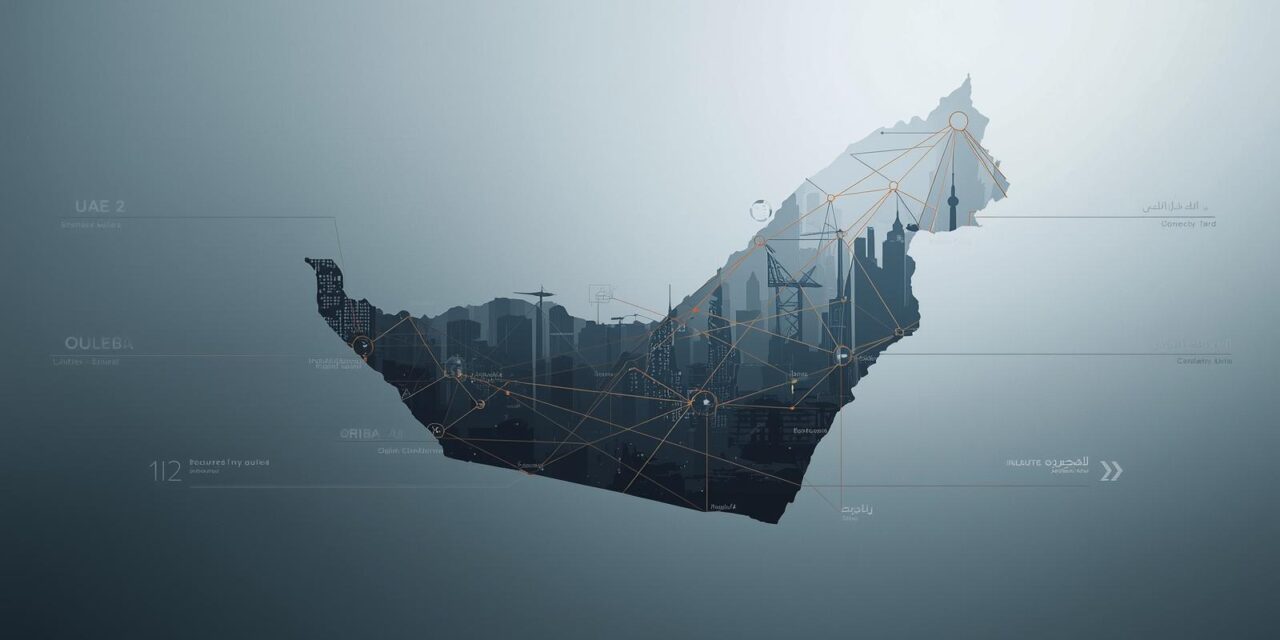
Q1 2026 marks a turning point in how the United Arab Emirates advances its national technology agenda. The period reflects a move away from planning and signaling toward coordinated execution. Under the framework of “We the UAE 2031,” the country is aligning regulation, capital, infrastructure, and talent into a single operating rhythm.
This matters because the UAE is no longer testing whether advanced technologies fit its economy. It is deciding how fast and at what scale they are deployed. Q1 2026 reveals that intent clearly.
From Vision to Convergence
January ’26 establishes the structural logic of the quarter. Influence, security, and energy are no longer treated as separate policy domains.
At the ‘1 Billion Followers Summit‘, the creator economy is positioned as economic infrastructure, supported by capital, intellectual property frameworks, and production-grade AI tools. Creators are framed not as individuals but as scalable enterprises with measurable GDP impact.
At Intersec, the same systems thinking applies to safety and resilience. Physical security, cybersecurity, and emergency response converge into predictive models designed to reduce risk before failure occurs. This reflects a broader national priority: digital systems are now considered part of critical infrastructure.
Energy forums in Abu Dhabi and Dubai reinforce this convergence. AI is applied across renewables and hydrocarbons to manage grids, predict demand, and reduce emissions. The approach is pragmatic. Transition is treated as an optimization problem, not a binary shift.
Institutions, Talent, and the Intelligent State
February moves the focus from systems to governance and human capital. The World Governments Summit positions the UAE as a convenor for future state design, with emphasis on AI governance, cloud sovereignty, and public sector capacity. These discussions are not abstract. They define how data, compute, and decision-making authority are controlled at the national level.
Healthcare and startups reinforce the same theme. Arab Health shows how clinical workflows, diagnostics, and biotech are becoming data-led industries. Step Conference connects founders, banks, and investors around applied AI, particularly in finance. Talent is treated as infrastructure, supported through dense networks rather than isolated programs.
Deployment as Proof
March signals confidence. The commercial launch of flying taxis moves autonomy from controlled pilots into public use, backed by regulation and infrastructure.
Academic and policy congresses provide validation, addressing long-term ethical and scientific questions that accompany scale.
What Q1 2026 Reveals
Three forces define the quarter. Sovereign AI is now a strategic requirement. The creator economy is formally integrated into economic planning. AI-enabled decarbonization is applied across energy systems without ideological division.
Q1 2026 shows a country operating as a systems integrator.
For investors, operators, and policymakers, the message is direct. The UAE is not positioning itself as a future innovation hub. It is executing as one.